
February 22nd 2026: plenty of rain, time on our hands and preparing to update for the first time in quite sometime…
Category: Allotment Gardening

November has arrived, and the leaves are finally tumbling in significant numbers.
October, though wetter than usual, was also a little milder than usual, and although the leaves on most trees turned in complexion, they seemed determined to cling onto their branches at all costs. However, a noticeable drop in temperature challenged their ability to defy seasonal gravity, and almost overnight the woodland floors, pathways, pavements and the road gullies are covered in nature’s familiar autumnal detritus Axminister.
The monster has but parsnips left in its open beds, and after the wettest July, September and October on record even these hardy stalwarts it must be said are showing the stress of having had their feet in too wet conditions for too long, and although the rest of the measure is emptied of stock, it remains far too wet to consider any type of groundwork. So to negate causing more damage by tramping on sodden clay, we’ll probably leave any attempt to cultivate and supplement till early next spring,
We have our stores of onions and frozen rhubarb; Mrs. Dirtdigger has jarred and prepared her tomato pasta sauces, whilst all the blackcurrant and plum jams are cupboarded for the winter months.
We selected a number of this year’s pumpkins and set them aside specifically for culinary use, and we will update the menus tab in due course. We have dried all the chilli peppers and will also make some jars of our favourite spiced staple, Harissa in the coming week or so.
We still have salad greens on-the-go in the polytunnel: winter lettuce, scallions and some spinach and truth be told they are performing better than the summer crop, and should see us up to the first hard frosts.
The last of the daffodil and tulip bulbs are planted, and we also set some buddleia and gooseberry hardwood cuttings while there is still some late autumn heat in the soil.

We have begun the annual winter scheduled potting shed clean up, and Mrs Dirtdigger has fastidiously scrubbed every empty pot and seed tray in readiness for next year. The plans are being drafted for a new year-new look approach into some elements of the plot as we set about mixing things up a little. We’ve foraged all our sweet-pea, titonia, cosmos, poppy and tansy seeds and these have been dried and labelled for next year’s instalment.

The days may be getting shorter, and the months this year to date have undoubtedly been wetter than usual. It may very well be that this is due in no small part to climate change, but one thing is certain and that is that winter is coming, and however severe or mild it may turn out to be will always be a hindsight assessment. But the garden needs rest, and sometimes the gardener too needs to take a lesson from the garden in this regard. Met Eireann, our National Met service has just issued its first red weather advisory of the season for severe wind and gusts as storm Debbie hurtles toward us, so time to batten the hatches, and perhaps, from some safe vantage point, watch as mother nature provides a crazy burlesque and strips everything bare on the biggest stage of all…

March, being March, has thrown everything plus the kitchen sink into the spring weather mix so far this year. The month began on a cooler than normal note with north westerlies chilling the early green shoots; cool gave way to cold and cold became five days of sleet, snow and icy nights. We’ve had blustery sunshine, driving rain, slate grey skies and localized flooding. March many weathers has delivered in style, but spring is here and nature’s urge to get up and growing is now insuppressible. As conditions allowed, we stomped the monster’s measure and have managed to get the Javelin parsnip seed to bed, and also move the Stuttgarter sets from their starter pots into terra firma, along with the Ailsa Craig seedlings and a new variety we are trying for the first time this year, Pink Panther, a small reddish-pink French variety.
The Moneymaker have been potted on as have the aubergine and pepper seedlings. We will go again with the petunia seed mix; we took our eye off them and they dampened-off, not surprising given the chill weeks at the start of the month.
The national holiday has come and gone and we, as a nation celebrated in style with many towns and villages organizing St Patrick’s Day parades for the first time since before the pandemic. The usual global greening of many of the world’s well know structural landmarks has been curtailed as a show of acknowledgement of having to be environmentally responsible, but there was the usual national greening with all-and-sundry decked-out in a fabulous array of jumpers and cardies, badges and rosettes, hats and scarves, shamrocks and harps and then to ice the cake it seemed the whole country watched as our rugby team delivered on years and years of promise.

We have, at last, tripped the other side of the equinox. There is now more day than night; not so much dark, and slowly increasing light.
Feverfew and tarragon, camomile and chives, parsley, sage, rosemary and thyme all the early fayre of the herb bed, waving green in a celebration of what spring brings.
All things being equal March has so far done what we expect March to do every year. We’ve managed to have the year’s first produce from the measure with some absolutely fabulous early rhubarb from the Timperley Early stools. We have so many packets of seed to empty and sow in the next 4 weeks, but we will balance hope and expectation with effort and creation and perhaps achieve a certain equanimity for the monster’s measure as we stride into spring this year.
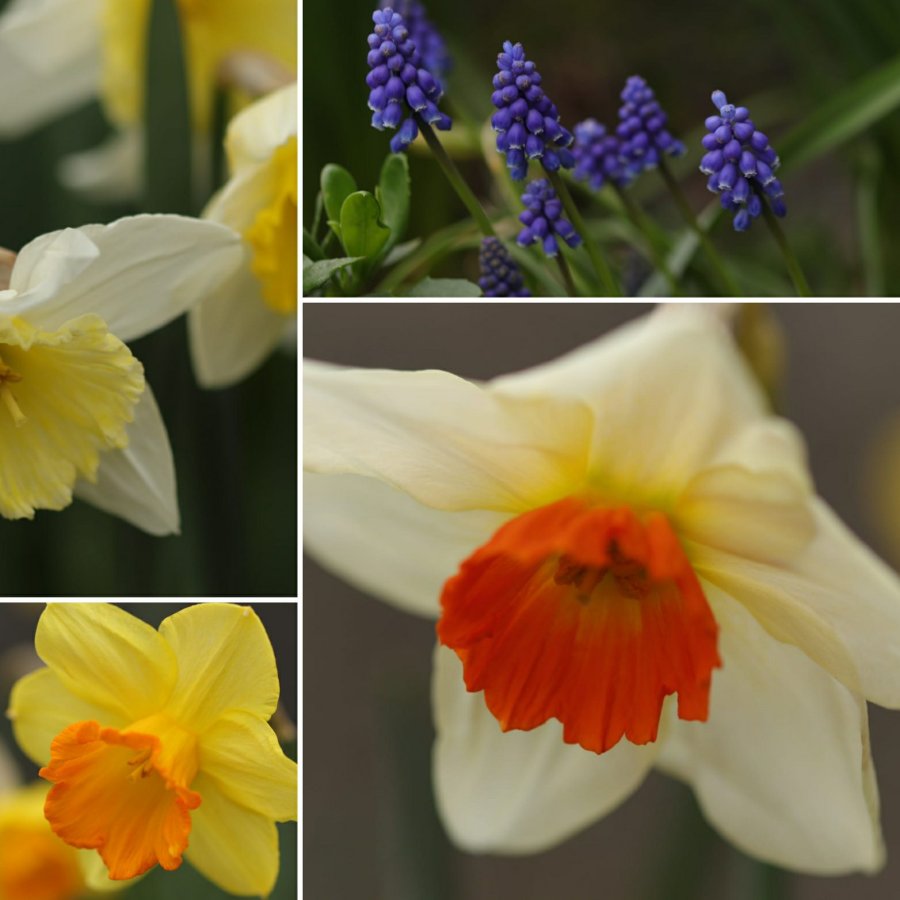
Although for some the flipping of a calendar page from 31st January to 1st February can herald the arrival of spring, in truth the early weeks of this short month often prove too cold and too damp and too grey to warrant sowing any significant quantity of garden or allotment seeds. Of course, exception being those that can be started with a supplementary heat and light source: chilli peppers perhaps, aubergines and a few early tomato varieties if the intent is to extend the season by beginning the successional routine right here at the beginning. And should the month prove inclement throughout, well make no mistake, by February’s end, even with a hidden wintry sting, spring is certainly discernible in the borders and hedgerows, with polyanthus and primulas, massing daffodils, muscari and crocuses as on the monster’s measure, or perhaps like us the first bud burst, with the blossom on the miniature Mount Fuji cherry finally showing through its jumbled puzzle of characteristic zig-zag bare winter branches.
By February’s end if spring is not fully sprung, it is at least, springing, and come St. David’s day no matter what the weather, you just know it is spring.
The last day of February; skies are grey with temperatures about normal for time of year. It has been drier than normal since mid-January, and this has also been the experience in quite a number of other European regions, with lower-than-expected snowfall on many a piste and lake levels currently 30-40% below average late winter levels.
Although drier than normal and with air temperatures a good two degrees above normal for most of the month, the last days of February had air temperatures fall back to normal with a sudden sharper fall for this 1st week of March; a return to chilly days and frosty nights, and for this reason more than any other we have not lost the run of ourselves with seeding.
The tomato, aubergine and salvia seed we did sow has germinated and we’ll prick-out and pot on over the coming days. We’ve sown some chilli peppers, and though a little later than usual we’ve sown about 20 pots of sweet-peas. We have gladioli corms and dahlia tubers we’ll start in pots in the coming days, and this coming weekend we source our seed potatoes and begin the chitting process. The onion sets and shallots shall also be laid out, along with the parsnip seed and the trays of summer bedding.
Without warning we once again find ourselves in many-weathered March. We can expect rain and sleet, gales and snow, bright sun and frosty windows and sometimes all in the same day. The light lengthens in March and we begin to get evenings. By the equinox on 21st of the month the days begin to outlast the nights, and this is what really makes the difference, the extra light that comes with spring.
Although into spring, early March still has cold, cold soil; too cold to plant out anything remotely tender, but woody shrubs and perennials can be placed out now on the early empty garden canvas, and early March is most definitely the last chance saloon for pruning currant and berry bushes, and if not done as yet, rose bushes and late flowering climbers.
By month’s end there probably won’t be enough hours in any given day to complete all we plan to do. All the late autumnal and winter prep should begin to pay dividends. The tool racks and hooks empty. The stacks of empty pots and trays migrate to every available light filled surface. Redundant hoes, spades and sprongs are re-vitalized and imbued with a new found usefulness, whilst visitation hours to the monster’s measure extend on a weekly and sometimes daily basis, and sure come daylight saving on 26th of the month we’ll be out plotting away till dusk before end of the month.
 Monster In The Corner...