
Time to get a move-on!

img_4591.jpg

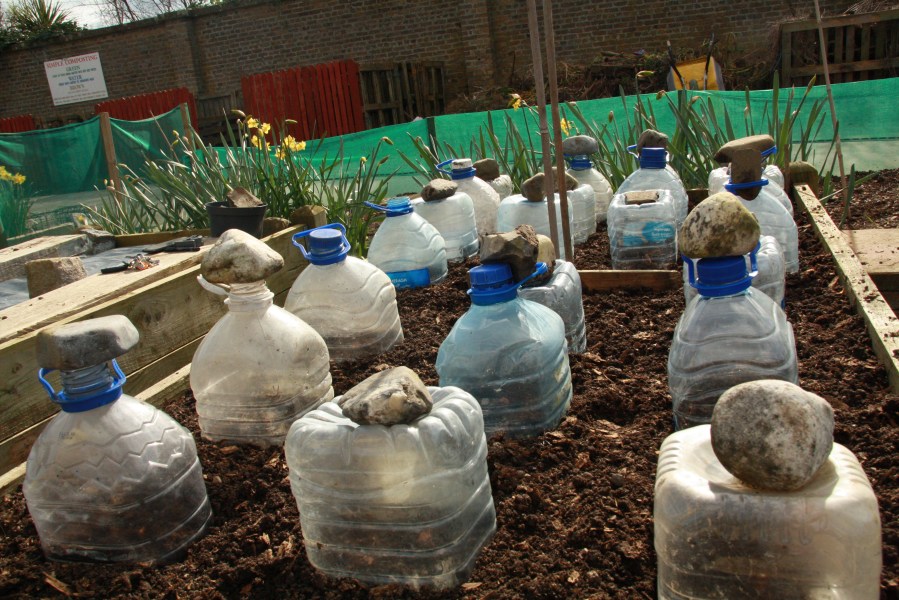
The Shallot cloche hotel picture courtesy of Janette

As any truly experienced gardener may tell you, the gardening year officially begins on 1st January and officially ends on 31st December. There is always something to do in the garden or on the allotment, regardless of the day, week, month or season.
The days and weeks of early spring are the heart and hub of all frenetic gardening and allotment activity. It is the time of year when the vast bulk of the allotment’s groundwork and preparation is established. All the crop planting and rotation schemes are sketched out; the early seeds are sown; the flower beds and vegetable drills are prepared; the new stock is bought, as are the stakes, supports, nettings and just about anything else which didn’t makes it through the winter months or has become so tatty and time worn as to need replacement anyway. The summer days and months are filled with the aftercare and attention necessary to the spring’s efforts with day after day of weeding and watering and hoeing, thinning out and filling gaps, dead-heading and truss-nipping and pest controlling and, if you’re lucky, hopefully enjoying the sun on your back and breeze on your face while you reap the early benefits of your effort: the strawberries, the early beetroots, the summer turnips, the goose-gob jam making to stave-off potential gluts, the lettuce leaves and the early cabbages with some Sweet Willies, early Zinnias and Lupins to add a splash of early colour to the plot and vase; and not forgetting the daily routines of watering and ventilating, and ventilating and watering in the polytunnel or glasshouse.
The autumn days are busy days, each one filled with its own fruitful promise, and each day seeming to add something new to the larder; all the onions and garlic need to be dug and cured; the tomatoes to be ripened quickly, the pumpkins needing to be turned and the late courgettes to be thinned, with the excess beets to be preserved and the winter kale and cabbages to be netted; the Swedes and Parsnips can be tested and the chutney is to be mixed as the days draw-in and the year’s span foreshortens and if you are fortunate enough to have them perhaps some apples and pears! Autumn is the time of year when every thing in the garden and on the allotment seems to come together and all the effort expended finally pays a dividend; food aplenty and a glorious show of rudbeckias, cosmos, sedums, dahlias and  that every allotment must have, towering sunflowers.
Winter arrives and (contrary to misconception) there is still just as much as ever to do on the allotment and in the garden; crops planned to be left subterranean will need plenty of care if they are to survive the deteriorating days; the autumn remnants will need tidying as a matter of urgency to prevent diseases from taking hold in the spring; growing areas and raised beds need to be cleared and more and most importantly have plenty of organic matter added to them or laid on as a mulch, and all beds where practical should be covered with a heavy duty tarpaulin or plastic to prevent too much leach and damage to the soil over the winter months.
Of course every year there is that period, right in the depths of mid winter when the weather, the festivities or the gardener’s bio dynamic says “not today”, and it is easier to remain indoors than to have to venture out into the harsh elements. The trick here is to view this as a passive gardening activity, the gardener actively deciding to allow the garden to rest and the allotment to sleep while nature performs its secret winter ministry. Such days must also be considered gardening days, winter days when you learn to reflect on the garden while happy to indulge the senses in the tastes and scents of the hoarded harvest; days when you are content to simply think about gardening and being thankful for the soil’s bounty; days when the seed of re-imagining is sown in your thinking; days of thought filled germinations which help recharge the spirit before you once more set out to fulfil all the promises of the garden in the New Year.
There are as many differing and diverging ideas on what a garden is and how to garden as there are gardeners who garden, but the one thing they’ll agree on is that the summer’s show and the autumn’s harvest are only ever made possible by the grubbing of hands. With the clocks going forward this weekend the final nail in hammered into the box of winter of 2015-2016.
It’s time to get a move-on: it’s time to take summer out of the packet and sow it in the pots, and it’s time to plant the harvest in the gardens and the plots…

1st ever International Greenfingers Day Saturday 2nd April…

for more information click link below…

https://monsterinthecorner.com/2016/03/16/international-greenfingers-day/
Extremely early is late March!

img_4606_2.jpg
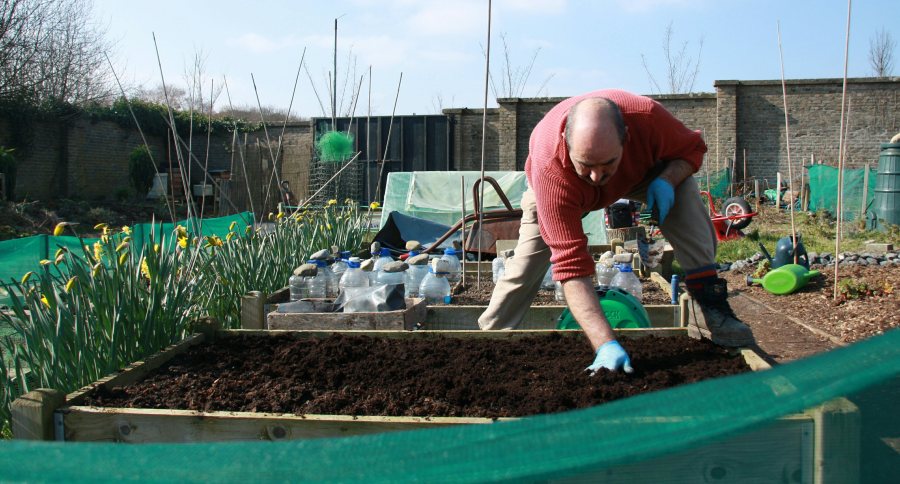
Getting a feel for things…

Once again Easter is come upon us. St. Bridget, St. David and St. Patrick have been observed; the daffodils that brightened the early  grey February and March days are just about hanging onto bloom; the newborn lambs are acclimatising to life on open pastures, the equinox has come and gone, this coming weekend will see the end of winter light saving with the clocks springing forward by an hour, and though still a long way off as yet British Summer Time (and thus by dint of proximity and associate extension Irish Summer Time) officially begins!
With March’s arrival came a much needed respite from what is officially the wettest winter on record, and although the days have been cooler than average for the time of year, at least that slow moving blocking anticyclone situated over the North Sea for the last 2 weeks has allowed the saturated ground to dry out a good deal. The lower than average temperatures will have slowed if not completely stopped all the early growth, but, with a forecasted return to Atlantic weather patterns from mid-week, there should be a pick up by this weekend and early days of next week.
Of course, the Easter holiday period also heralds the 1st big bonanza of the year for the gardening fraternity with all the major DIY stores and garden centres making their first big push for your attention and potential future custom throughout the coming year. Everything from wheelbarrows to hand trowels and dibbers, Patio tables to BBQ’s, decking, lighting, sheds and paving will be on offer; whole sections with the latest range of gardening power tools to help you to mow and to strim, to rotovate and propagate and power-wash every square inch of your garden, no matter what its size. There will also be a dazzling array of seed packets to peruse and confuse and even still (at this late stage) some summer flowering bulbs which failed to shift over the late winter and will now be cast as the loss leaders, and may only prove worthy of the outlay so long as you get them in the ground before the weekend is out. There will be pots and trays and labels and waterproof pens; kneeling pads and micro-mesh, compost bins and water butts; pond kits, tap kits, hose kits, polytunnel kits, everything to help tie in your roses, tie up your peas and tidy up your act as a gardener.
This Easter weekend will also see the year’s first big displays of potted bedding plants. Of course, with Easter this year being celebrated extremely early in late March (from a gardening perspective that is) a lot of greenstock is already on display and a cursory glance should alert you that a lot of what will be on offer will not have been adequately hardened off.
Worth remembering is, that these big retailers are solely interested in the depth of your pocket and their ability to have you constantly dip into it at their bequest. From the gardener’s viewpoint you must not forget that if you buy early, plant later…at least a week or two later
Chase the bargain by all means; but, if you rush directly from the checkout to the chilly March soil, you will simply be sowing your good money to go bad…
Buy a bargain, sow on time and cultivate it well and bully to the gardener;
buy a bargain, then have to buy the same next month, and the month after that…and …bully to the big boys…
Extremely early is late March! Be thankful and Joyous for what Easter brings. Eat plenty of chocolate if you wish… but, easy as you go when in late March soil you sow!

Wednesday 23rd March is International Meteorological Day, and not forgetting that

Saturday 2nd April is International Greenfingers Day,

https://monsterinthecorner.com/2016/03/16/international-greenfingers-day/

International Greenfingers Day!

By mid March spring pins its promise to the post. Winter may have been the wettest and wildest on record and February may have shorn each new-born’s fleece immediately upon arrival, but by mid March there should be at least one stand-out day whence spring’s true intent is proclaimed.
Through living room windows the sun may shine warm, yet a dash into a shaded back garden to save the washing from a sudden downpour and your fingers let you know that there is a still a lingering sting of winter about.
But it is March nonetheless, and the gardening year finally kicks off in earnest. The interior sills of the house which helped support the early tomato and aubergine seedlings suddenly prove wholly inadequate for the volume of trays and pots now to be sown, so everything is gingerly moved to the polytunnel for hardening off and every wind protected south facing sun trap around the allotment and garden is quickly filled with pots of potential summer promise.
The seed catalogues have been scoured and the year’s stock ordered. The latest gardening and weather Apps have been downloaded and installed; blog sites have been trawled for nuggets of wisdom, and after the long winter hibernation you’ve once again struck up the annual rapport and reacquainted yourself with the personnel of the local gardening centre. The pots and trays are clean and ready to go, the bags of compost have been moved into a sunny patch to warm them, and where in January and February many an idle hour was spent planning How to work your allotment from the comfort of your armchair, now that March is arrived you’ve simply got to get out and actually work in the allotment and garden.

Gardening activities aside, March is still one of the busiest months of the year. It always has been. In ancient Rome this month marked the beginning of the New Year; the previous period of over 90 day remaining unnamed as it was winter; and ancient Rome simply didn’t do winter. With the improvement in weather conditions March heralded the beginning of the Roman agricultural growing season, the bettering weather also improved the travel and access routes to other places and as such March also marked the beginning of the War season. It was filled politics, Caesars and brutes, with soothsayers and backstabbers; a brute force of backstabbers.

It is said March ‘comes in like a lion and goes out like a lamb‘; it begins with a leek and ends with the clan; it seems every other day is a daffodil day and then there’s Mothers’ Day, a Children’s Day, a Women’s Day, St. Patrick’s Day, the National holiday, an equinox, a guaranteed 21 days of lent, at least 10 days of Seachtain na Gaeilge, 4 days of Cheltenham, a National plant a tree day, an occasional Good Friday and Easter Sunday (and of late a Dyngus Monday) International ear-muff day, Intergalactic close encounters day, Transgender Awareness raising day and International Social Worker Appreciation day…Phew! There is also the last day of meteorological winter and the 1st days of astronomical summer to contend with; and, if you happen to be Irish, there’s the have-to-get-your-1st-early-spuds-sown-by day. Yes, there’s a lot to fit into the 34 days of March, and though the ghosts of Romulus and Remus are oft chilled by the airs of the span named in honour of their progenitor, there are days in March when, like yesterday, there is just a hint of spring in the air, 12 degrees centigrade and no night frosts forecast for the next couple of nights; and from a gardening perspective this is about as good as it gets for early spring, so it’s time to get grubby.

A little known fact is that Saint Fiacre, a 7th century hermit originally from just down the road in County Kilkenny is the patron saint of all gardeners and vegetable growers. A lesser known fact would be that he is also the patron saint of all those suffering from venereal diseases, and that his feast day is celebrated on 1st September. This is just one of the many harvest festivals associated with the bounty of the seasons, the soil, and the earth. And there are many traditional harvest day celebrations right across the globe from the Chinese Rice Moon festival on to Lohri and Holi in the far east; to Lammas and Horkey closer to home, including St Fiacre’s day and through to our own Samhain while not forgetting Thanksgiving in USA.
And yet for all the days through the year set aside to celebrate and appreciate just about every human activity, achievement and organisation, you may not be aware that there is no one day through the calendar year dedicated to celebrating those who work in or on the garden; no dedicated gardeners or gardening day. No; not one single day set aside on the calendar to acknowledge the effort of all those seed sowing and green-fingered individuals who set out each spring to make our summers wonderful and to make every harvest possible.
There are many days throughout each year set aside for the great flower shows and gardening festivals, like Chelsea, Chatsworth, Malvern, Tangshan and even our own Bloom, and these in essence, where they are not business driven extravaganzas are celebrations of the flora world itself. But there is no one day singularly devoted to recognizing, celebrating and endorsing all those amateur botanists and urban farmers, all those groundsmen, greenskeepers and landscapers, the nurserymen, seedswomen, professional horticulturalists and suburban gardeners, all the rooftop and balcony constrained potterer-abouters, the window-sill cultivators, and all the community gardeners, con-acre smallholders and lifelong allotmenteers who work tirelessly at greening our world.

And so I now propose that what we need to do is set aside one day in the year to celebrate the effort of all those who garden! To celebrate the gardeners in their gardens, whatever form their gardens may take. And I propose that we should acknowledge this effort right here at the start of things, at the beginning of the gardening year (OK, so I know I’m scripting from a northern hemisphere perspective but we’ll have to start somewhere). And I can think of no better time to have such a celebration than right here in the midst of all that March mayhem whilst every gardener is busy getting his and her hands soiled and abstractedly lost in the actual dirty business of gardening.
It shall be designated International Greenfingers Day by way of acknowledging all those fantastic and differing classifications of sowers and growers outlined above. And once this seed is sown careful nurturing should bring it to fruition. It will take many years, but as gardeners we are familiar with the waiting process.
Looking to March’s packed agenda, and with consideration given to all things meteorological and astronomical including a nod to the hurdles and the wearing of the green and conscious to leave a little wriggle room for the Twins to settle their score with the Ram, I propose that International Greenfingers Day be celebrated on the 33rd day of March, aka 2nd April.

International Greenfingers Day

And so it should be, a new day of Celebration is dawned; International Greenfingers Day will be celebrated for the very first time on Saturday 2nd April 2016: and I propose it be celebrated on the 1st Saturday of April each year thence, save whence that day falls on the the Fool’s errand 1st April, when it should then be celebrated on the second Saturday of April:  nothing like a moveable feast to work up an appetite.

And how as gardeners should we celebrate?
Sow up a pot, plant something in your garden or plot, and do it on this day. Mark the occasion…keep a record, take a selfie of the sowing ceremony if you must; buy someone a very small pack of seed and have them sow it on this day; help to get someone else to sow and grow their own, or for the gardener in your life buy them some small pack of seed and ask for a share of the bounty, be it a poesy of bloom or some stock for the pot once it comes to fruition in the summer or autumn…nothing extravagant; remember
Gardeners tend the toil, nature makes the show…

“From the smallest seed the mightiest tree doth grow.” This here is a seed…

let us all cultivate it.

February Treachery

February is a treacherous month.
Being the runt of the calendar it is always found wanting when compared to the other months diary pages, and the dissident approach to adding an extra day to its measure every four years never fully camouflages the perennial happenstance where it is not only at odds with the other months, but that most of the time it is also at variance with the seasonal expectations of its own annual occurrence.
Deceiving at best, February is the gardener’s nightmare: feigning spring at mid morning, gale backed squally showers by noon often give way to some of the severest and sharpest frosts of the winter during hours of darkness. Yet, we persist with the assertion that February heralds the arrival of spring, the sneaking suspicion being that this has more to do with wishful thinking than any reality experienced in the garden.
The need to shrug-off winter’s pent-up reserves, together with perceptible increase in daily light levels often lull the naive and inexperienced into a false sense of security, and many a seed sown in February’s haste is doomed to be composted with March’s waste. The milk may be moving in the belly of the ewes, and the bright white complexion of Wordsworth’s unbidden guests may be showing on woodland floors, but it is worth remembering that these are nature’s hardy stock, far hardier than anything even the most experienced gardener itching to green fingers may have sown under horticultural fleece and propagation lighting. No one ever truly gets a head start on nature, so, take stock still, while there is still stock to take: hold your horse in the stable; keep your seed in the packet and your pots in the box. Soon enough you’ll get to grubby your hands, but before you set out to lose yourself in the doing of the garden, think on how to do it while there is still time to think on how it’s done.
A seed for cultivation:

“Those who start to garden often do the greatest harm in the garden.”
And suddenly, it is March…

Bedfordshire Champions
Bedfordshire Champions, up and out of bed…