
Airily and imperceptibly it has happened upon us again. Tipping day unfolds ‘ neath heavy humid skies. A steady drizzle grounds the flying ants, and a deep slate grey of midsummer’s duvet hints at Thor’s mighty hammer smash in the coming hours.
The gulls and starlings that yesterday spent hours on the wing gorging on summer’s aerial feast, are this morning taking it a little easier along with the rooks, crows and blackbirds who now find the jaded and wet ant-feast crawling at their feet.
For the first time is over 5 weeks, lighting-up time last night was back at 10.00pm, and the majority of Dublin’s street lamps, including the one directly outside our garden wall flickered cool pink at 21.59 precisely.
July 19th; Tipping Day; the 200th day of the year; the first point beyond high summer in Ireland, and though, if we’re lucky we shall still have some days and weeks of pleasant weather ahead, by this day each year there is that unmistakable sense that changes are afoot, and none more so than in the garden.
We arrived at the monster’s gate yesterday evening to find the Bunyards Exhibitors had given up the ghost completely. Although showing signs of stress the last week or so, yesterday they finally surrendered and we arrived to find them prostrate. We stripped the last of the pods and we will cut them to ground over the coming days, leaving the nitrogen rich roots in place a while longer. The Sutton Dwarfs are also showing signs of struggle, but we’ll keep these well watered in hope that they will hold for a fortnight yet. The Jumbo peas are cropping and holding up well; we have lifted our onions and set them to cure, and we have also sown our spring cabbages together with successional lettuces, radishes and chard leaves.
The reasonably good summer –which for the most part it has been, to date -has left casualties in its wake right across every garden and allotment site; a lot of the allium and leaf crops have bolted, and we too have had our fair share of losses with the shallots and chard, rocket and lettuce going over very early; but we have made further sowings.
Indicative of the fairly good summer temperatures so far this year, we arrived Monday afternoon to find the Monster and her neighbouring plot under a buzzing cloud of black Irish Honey Bees. Having originally swarmed the day before, they had set to hive in a compost bin on the corner of our neighbours plot, but, being made of black plastic their new home immediately overheated once the temperature rose to the high twenties. This no doubt proved intolerable in the black plastic compost bin and once the new combs began to collapse they swarmed again, setting up temporary stop on a sweet pea frame directly beside our plot. Three years in succession at our former allotment site we had been lucky enough to witness this great summer spectacle, and perhaps the only true regret we had in leaving that old site was that we would miss the beehives that were in situ there; and as beehives are not facilitated at this particular site we more than pleased with Monday’s swarm. Getting over their initial fear (- most of the plot holders at this site had not experienced such a sight before) the event proved a great photo opportunity for all the Monster’s plotted neighbours, and thanks to Keith from the Dublin Beekeepers Association who came boxed and smocked with smoker once the rescue call was logged, a lot of the plot holders now know a good deal more about honey bees and the swarming process, and hopefully will have gained a little more appreciation for these wonders of the natural world.
We have made our Blackcurrant and Gooseberry Jams, and once this evening’s final offering of Hinnonmaki Gooseberries are jarred we will have jammed 48-50 jars in total, and given that we uprooted and re-set the stands in the move to our new location we are reasonably happy with this result. We jarred some rhubarb and ginger also, but our Victoria certainly rebelled at the severity of being split and dumped and after an initial helping in late May we’ve since left it to recover the rest of the year…
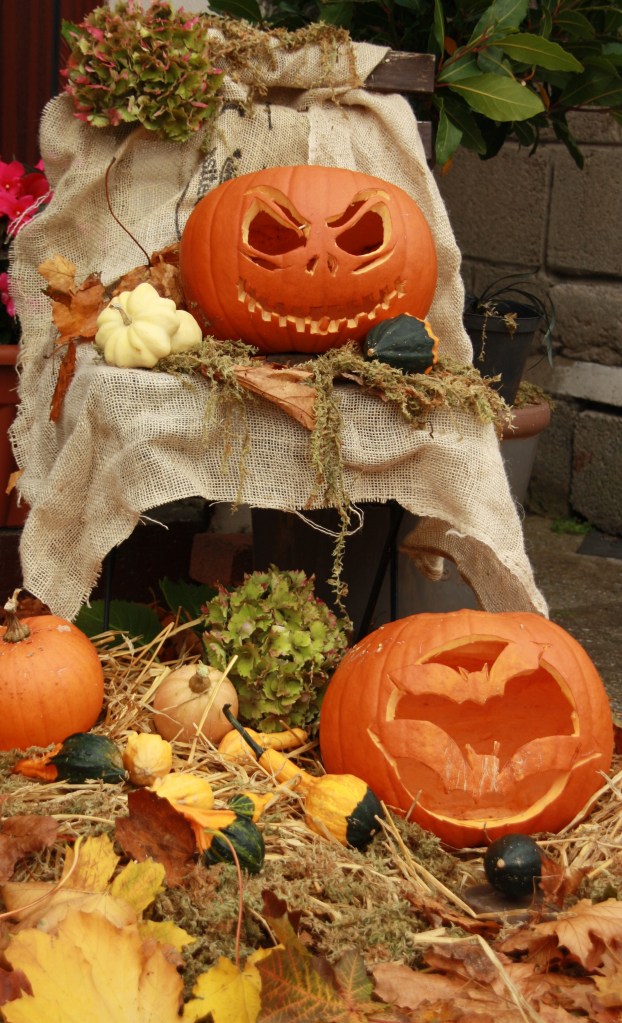
The rocket was/is peppery and fabulous; the lettuces crisp and fresh. The Solo beetroot has, once again, proven itself a worthy performer, while the Kale Negro and Bright Lights have been used continually as cut-&-come standards for the last 7-8 weeks. The Jack O Lanterns vines have all set fruit and we’ve pinched the tips; the Big Max however is struggling big time.
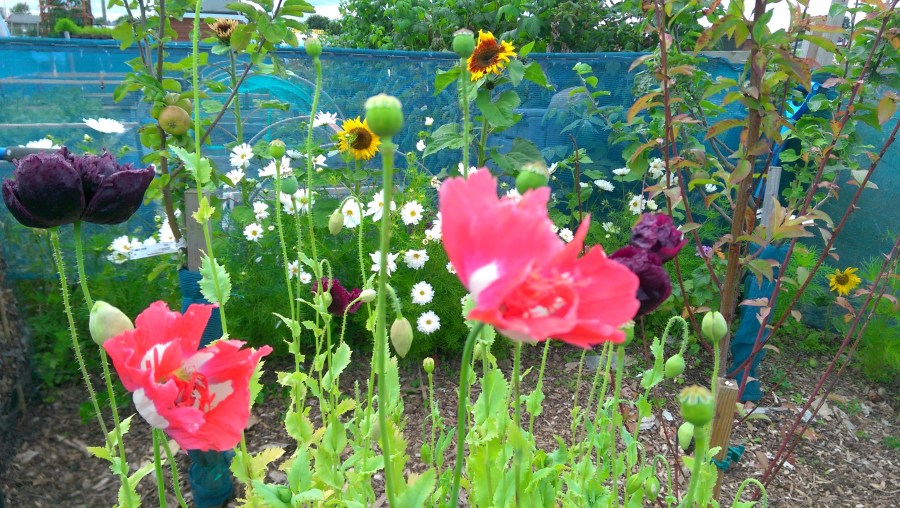
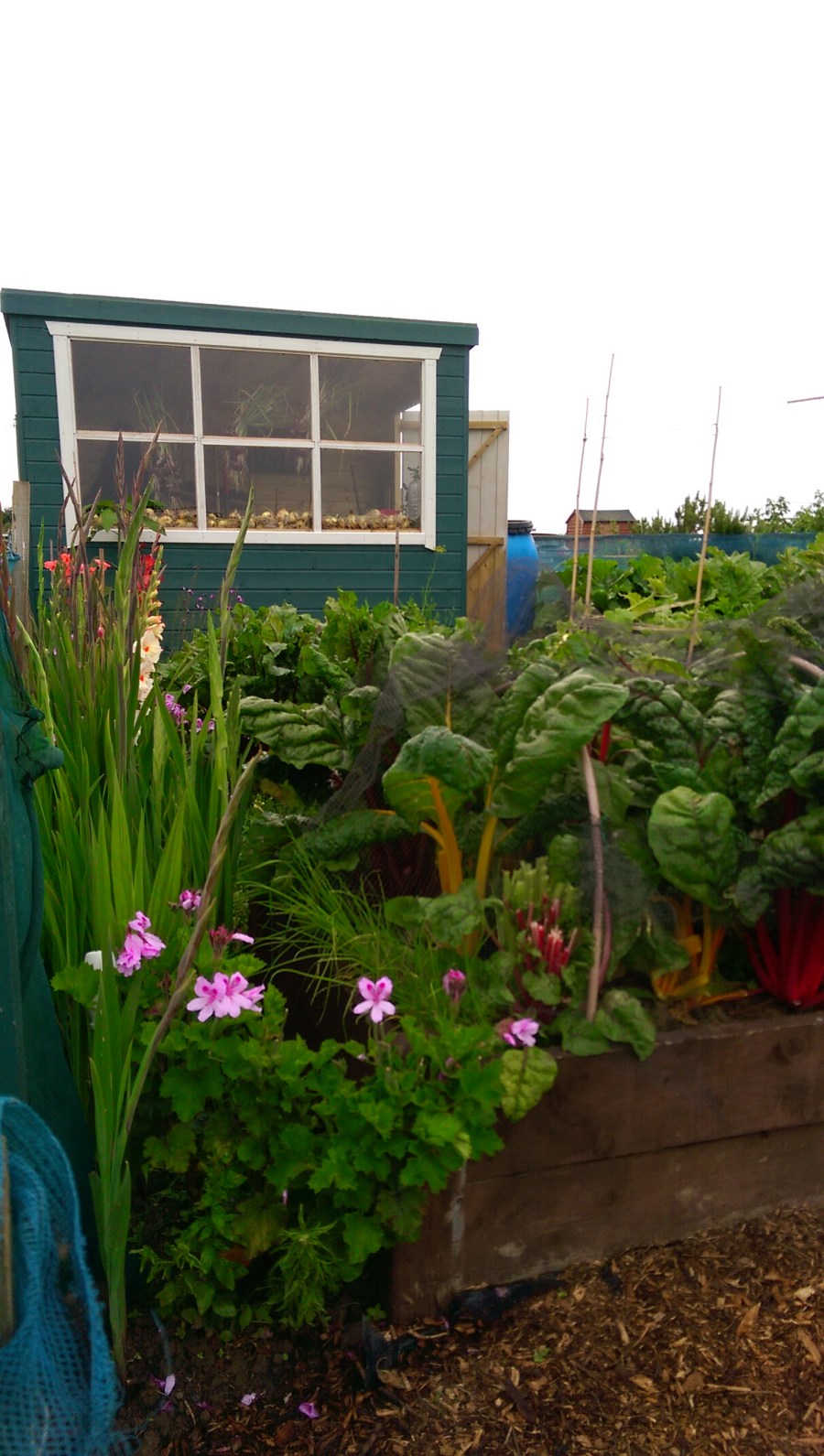
We have tomatoes aplenty on all our plants and they’ve begun to blush ever so slightly, so here’s hoping for an early harvest of Shirleys, and Marmandes. We are using the Gold Rush courgettes and will most likely have to start passing these on as they look set to glut. The Greenshaft are a few weeks behind but have set at last, as have the first of the Akito cucumbers. The Tender & True parsnips have caught up with the late sowing, and all of Mrs. Dirtdigger’s roses, and gladioli have put out some wonderful seasonal colour and scent, and one of the running commentaries for the last 2 months amongst our new neighbours is the wonderful wildflower area scattered by the self same dirt-digging Missus on that area we intend to erect our polytunnel on early next year.
How quickly things turn; the hand spins a circuit of the face, days come, weeks go, and months and seasons slip past unnoticed.
As much as it galled and upset us at having to vacate our well tended and much toiled former allotment, that sorry saga is, thankfully, a distant memory, and the level of enjoyment and success we’ve experienced in such a short time span on this our new adventure has led us to speculate as to why we had not moved sooner…but, c’est la vie!
We have hares and pheasants and buzzards. Yes, wonderful crying and screeching buzzards. There are tits and finches and thrushes. We have butterflies and bees and we can see the sea in the distance. We have made new acquaintances, and run into some old faces. We were faced with a challenge last December are we’ve thoroughly enjoyed the rising to it. We have been busy; so busy getting re-established we have neglected to write as often as we should, determining at times to Garden instead of writing about Gardening, but perhaps we’ll have a little more time now.
It has been a major success all round. We reached tipping day in better array than in any of the previous 6 years. I would like to be able to say that we’ve had a 100% success rate in every aspect of our new allotment endeavour (which by the way we have) but I can’t. The most we dare say is that we almost had 100% success, because there’s always that one thing that throws the damned lie into sharp relief, or unwittingly undermines the veracity of the unverified statistic.
So, we’ve had a 99% success rate, because there’s always one, isn’t there? Always a fly for the ointment, or a pea for the pillow. Always something which fails to do exactly what it says on the tin. A prima-donna, a wannabe, something with ideas way,way above its station.
There’s always some commoner gardener vegetable that decides it’s having none of this and just opts out…none of this hard outdoorsy living; none of this bush tucker existence; no association with celebrity B list vegetables and C list fruits; stuck with your feet in the muck for months on end and a social profile lower than a didgeridoo’s bell end…chicken manure for tea and strained nettle and seaweed soup for brekki…no way Jose…Who mentioned ants?….hit the deck quick and get me out of here!
So, I’m a celeriac they thought…doo dah!!!
Yes, we’ve only had 99% success on our new plot… Only 99%. One little thing let us down, and after 4 failed successive sowing we decided to leave it for this year, but we’ll not go into that here…

 Monster In The Corner...