Finally, the deed is done; Spring crawls through a rotten stream of 120 crappy days in a row and May comes out the other side clean. Ok so it’s not exactly Abrahamic, and it’s certainly no Lukan prodigal nor even a Saul to Paul experience; it’s not Shakespeare’s Leontes nor Dostoevsky’s Raskolnikov; and hell it sure ain’t no Andy Dufresne, but make no mistake, after weeks (if not months) of delay and retardation the early days of May have reported for duty ushering in light winds with warm pulsing rain and in the process have managed to redeem not only this year’s spring, but have also compensated for the total lack of that season from last year’s annual cycle. The year’s attempt to trudge winter’s tale into March, April and beyond is terminated, and where till now it could reasonably have been thought that winter was being extended interminably, from here on in any inclement hiccups must simply be classified intemperate spring days. As warden Norton may have noted; Winter, upped and disappeared like a fart in the wind…
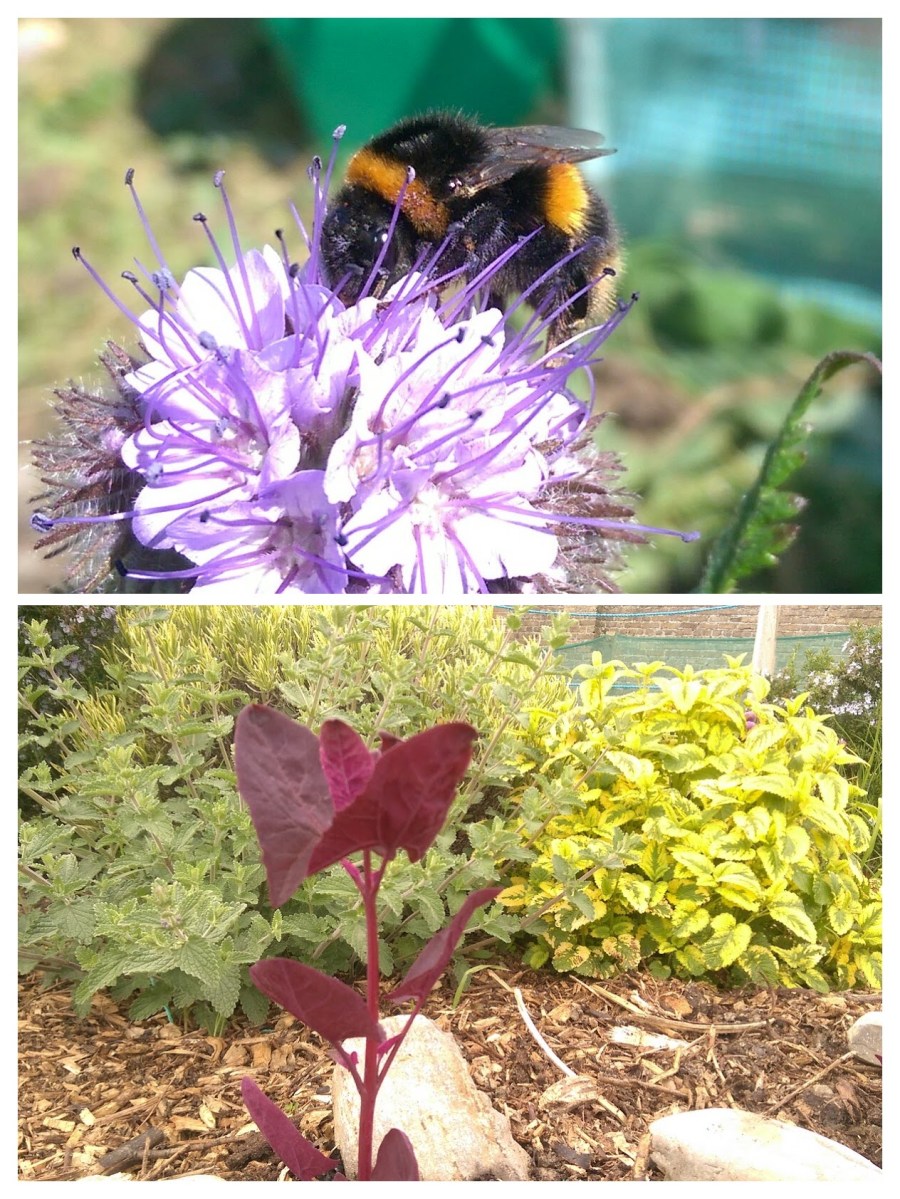
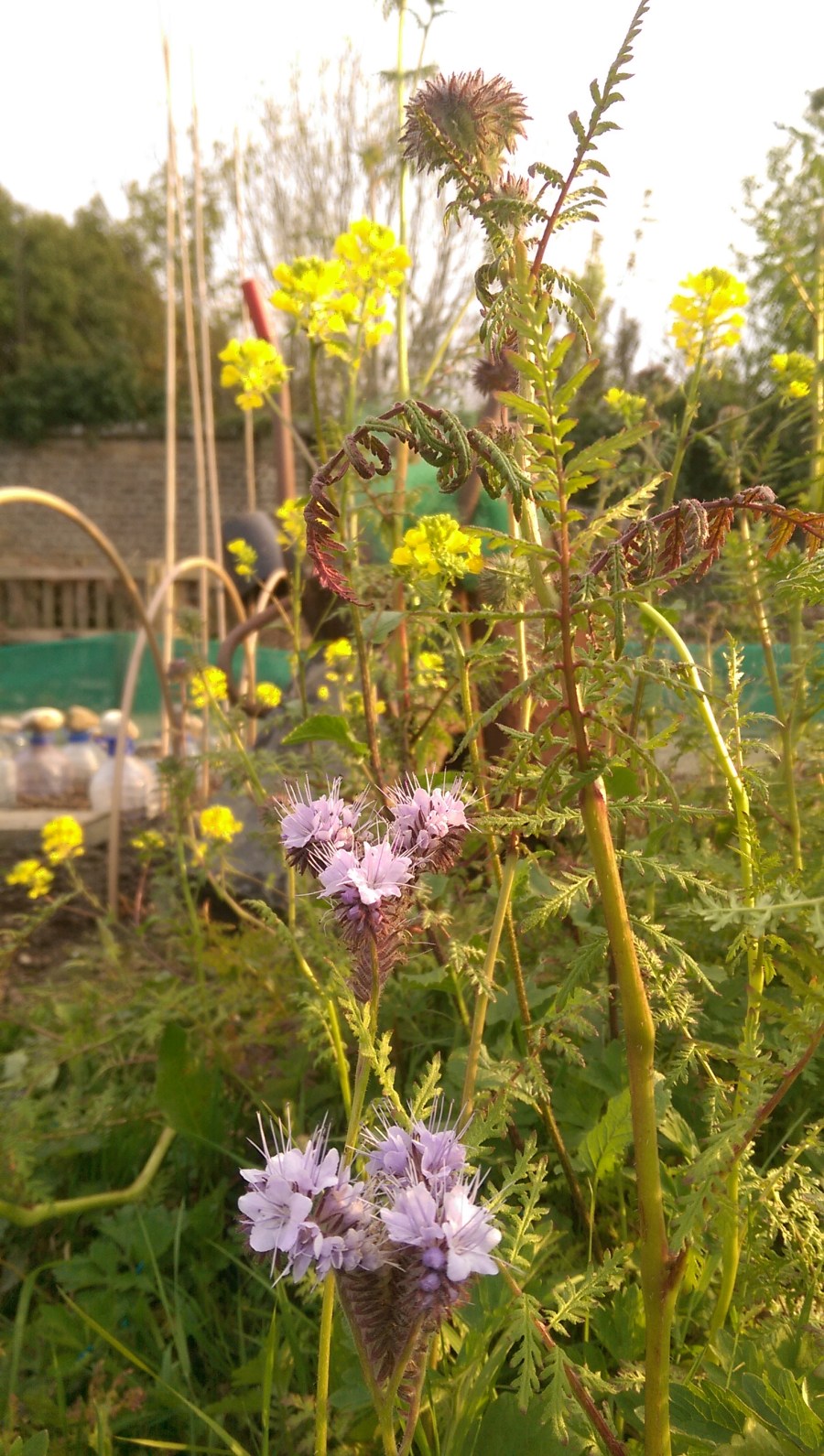
Phacelia & Rape
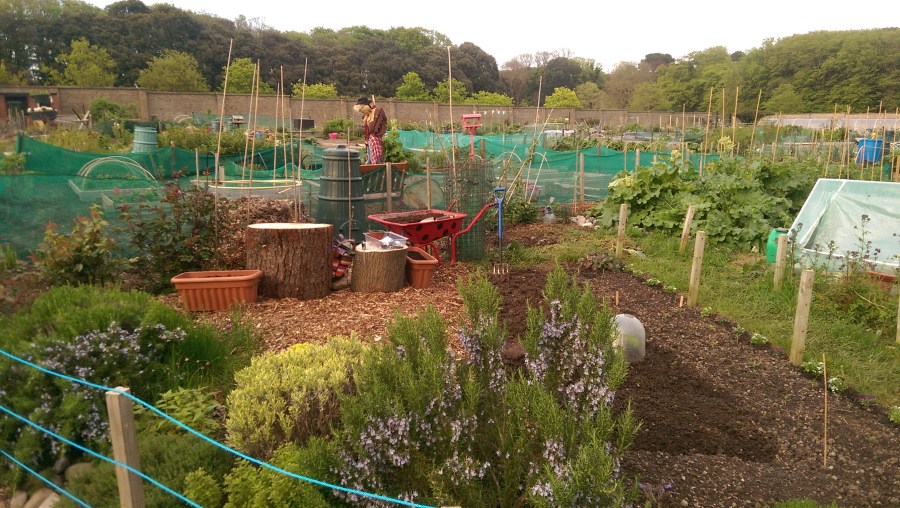
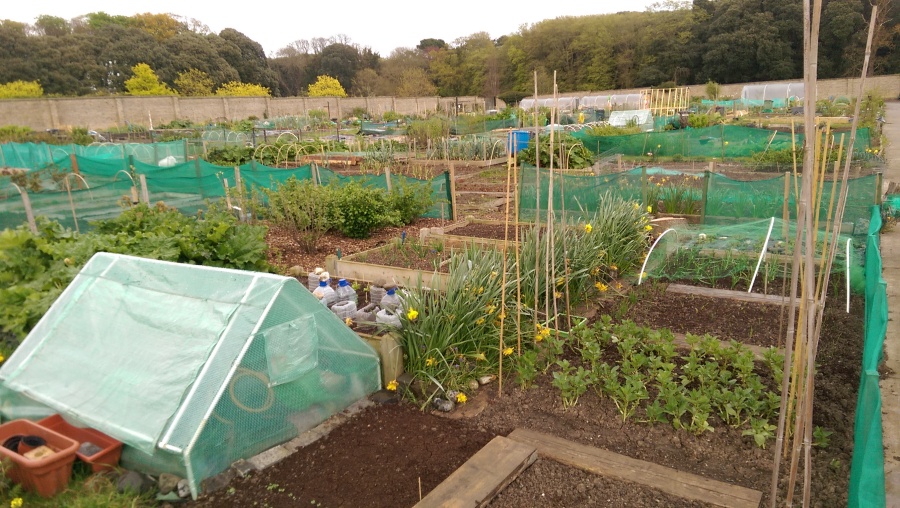
We spent quite a few short sleeved hours this weekend spot dropping the cosmos, alyssum and marigolds onto the Monster’s face with the scent of sun-cream wafting from neighbouring plots, a noticeable increase in the volume of activity from the ladies’ hives in the corner, and the sound of children giddily making the most of stray spray form those plot holders who’ve suddenly switched from using watering-cans to cultivate their plots and have resorted instead to the use of the summer hose-reels. The sky was bright, the air was mild and the soil finally warm enough to allow us sow our French beans, which we duly did. We also scattered a ridge of curled parsley seed together with troughs of coriander and fennel seed. With these sown we are now left with only the winter kales, courgettes and cucumbers to sow at the end of the month, and once we a pop those few pumpkin seeds in the ground at the beginning of next month there will be little else sown in the annual schedule of plot 49. Of course the odd successional tray of lettuce, basil and beets will be needed by mid-summer, but how quickly the Monster’s schedule is fore-shortened and for all the worrisome angst through the slow cold days of late March and April we are now most certainly heading to a consideration of summer with all the latent promise of that season. We are harvesting the rhubarb, and the radishes and lettuces will be ready soon enough. The 5 gooseberry bushes have set fruit, as have the Ben Lomond’s, we’ve thinned the parsnip and beetroot to final spacing, and as said in the Monster’s previous outing we are weeding, especially in the onion beds. And lest we forget to remind you, we are weeding in the onion beds… And to round off with an ol’ Redism of sorts, this time of year there are basically two options on The Monster in the Corner, you either get busy weeding, or you get busy weeding!!!
The Dimpled Globulus Golfus. Strange Fruit Indeed.
Yesterday evening, we here on Monster In The Corner hosted the first of this year’s open events. Each year we endeavour to facilitate local gardening associations and interest groups wishing to have a look around the walled garden. Over the years we’ve accommodated local schools and Girl Guide troops, scouting and Sunday school groups and the local herbalist society. Each year we also receive requests from local associations and branches of the GIY (Grow It Yourself) organisation.
GIY began life as a network of gardening and allotment enthusiasts dedicated to growing their own food. It quickly became a national network and recently has reached out to become an international organisation. It is a not-for-profit network with over 50,000 people currently involved in 800+ community food growing project groups that in recent years has gone from strength to strength.
Last year we received a request from the Raheny GIY group to allow it peruse the walled garden, and yester-evening we were happy to host the Clontarf branch GIYers.
For many of that group it was their first visit to an allotment garden, and I think it is fair to say that by the end of the 90 minute tour some of the questioning curiosity and keen anticipation was more realistically grounded than it had been when they first entered the garden. Although gardeners themselves, the GIY group’s misconceived vision of allotment life was certainly jolted, but that is not to say they were not impressed with the allotment garden as a whole. I think the biggest surprise to the group was the amount of un-worked and/or abandoned plots around the garden. We pointed out that we have just had the longest winter followed by a delayed spring. We also drew attention to the fact that Life sometimes gets in the way of peoples’ desire to garden, and accounting for the fact that a lot of people take on an allotment without any idea at all regarding the level of commitment needed to maintain it, we told them that it is never surprising our allotment garden has an annual abandonment rate (like many other allotment gardens) of about 15%.
Overall the group enjoyed the experience and were fascinated by the vastly differing approaches used by the collective plot holders in working their respective plots. It was quickly determined that there are as many ways to garden as there are gardeners to garden, and never more so than in an allotment garden; raised beds, lazy beds, turned ditches, square foot planning and no-clear-spot-planting; buckets, barrels, barrows, baskets and boxes; recycled tubs and misplaced piping. Small plots, fallow plots, overgrown plots, recently sown drills, and not forgetting the Monster in the Corner, which we like to consider (with bias of course!) as one of the exemplars.
We were asked about growing mediums, and crop rotations; organic seeds and heirloom varieties; compost, leaf-mould, perennials and annuals; polytunnels and cloches, with pictures taken of anything and everything which caught the eye or was deemed click-worthy.
The group spent some time examining the Monster’s measure itself and all that is currently sown and in-situ on our own plot.
We were asked about our favourite crops, our most challenging crops, our most dependable crops and our greatest failures.
Enquiry was made into the most exotic thing we’ve ever attempted to grow, and we reminded the group that exotic fruit and vegetables invariably need exotic climes in which to flourish, but that with the aid of a polytunnel you could, if you wished, attempt a venture with more exotic varieties, whereas to our mind a polytunnel is best served in simply helping to extend the growing season. We did say we had attempted Romanesco with some minor success, and Radicchio, again with minor success, Oca, Sunchokes and Samphire, but that we do like Celeriac, and not so much that it’s an exotic vegetable, it’s more that many gardeners don’t actually grow this fabulous gnarled root.
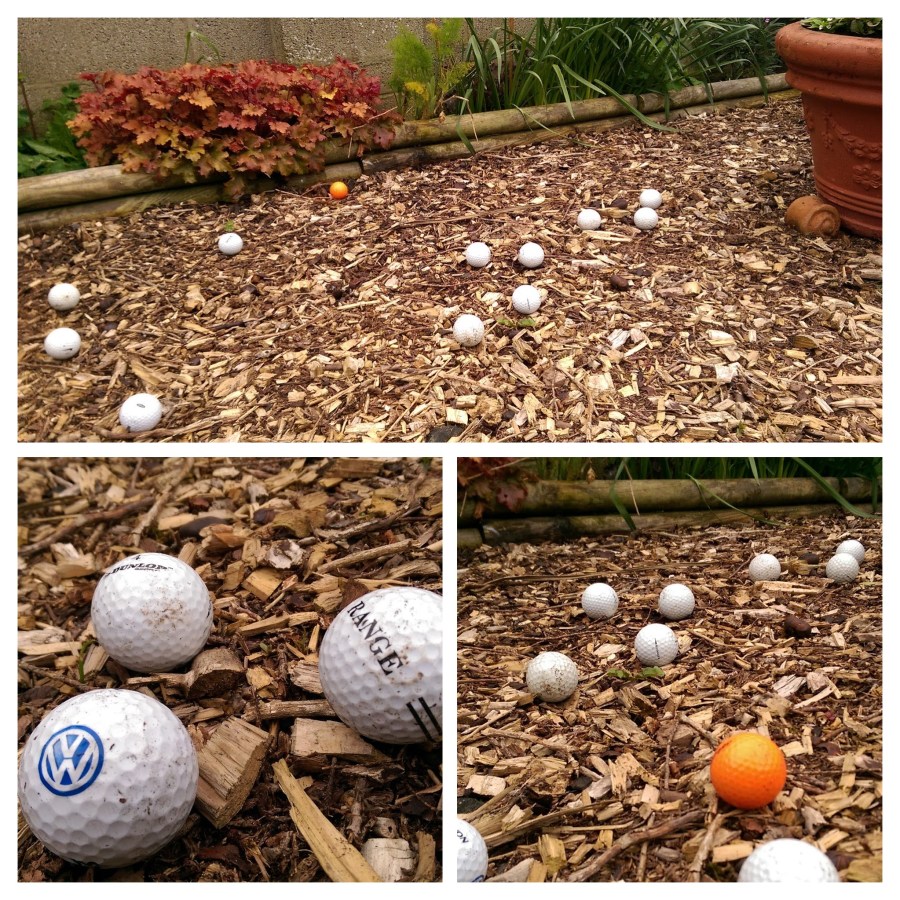
We then drew the group’s attention to the garden’s most exotic produce: the Dimpled Globulus Golfus.
The Dimpled Globe is a random free forming crop that suddenly appears on certain plots, and all the more so with any slight improvement in the weather. It truly is an exotic crop. The fruit appear as if by magic. No seed is ever sown, and neither leaf growth nor root growth ever observed. No drills need be prepared and no weeding ever needs to be carried out. Curiously, no watering is ever needed to sustain the crop; in fact is has been noted that where all other crops thrive after a downpour of early spring rain, this particular crop disappears until the weather improves. It is as if the whole staggering 800 million year evolutionary development history of the flora world is instantly perfected in the blink of an eye, and these dimpled fruit-lets appear without any effort at all. Tah Dah!
They are sun-proofed and water resistant and hard as the hammers of hell and wholly inedible. The cultivar is predominantly white, but mutations and variants luminously coloured yellow and green and orange have also been seen. This predominantly summer occurring crop is a constant source of fascination to everyone.
No-one ever sows them, and yet there is this steady and constant seasonal supply.
No-one knows for sure where these strange Globes originate but legend says that these come from beyond the walled garden’s walls, where another and altogether stranger world exists. There are some here who claim to have heard strange incantations from this other world just before the appearance of the Globulus Dimplex, and on certain still and quiet days feint echoes of this distant invocation will be caught drifting on a summer breeze: Fore! Fore! Fore!…
Last year the plot holders managed to harvest over 460 of these during the summer season, and we then sell them back to the local Pitch-and-Putt clubhouse: a bag of ten fruits for Eur2.00…no best before date, no sell by date, and no refrigeration needed. What a bargain eh!
And Oh! how our visiting groups love to take home some of this strange, strange fruit.
May 3rd and for the third night in a row we had no frost last night…Spring perchance!
After one of the coolest Aprils in memory May arrived and with it brought the first prevailing south-westerly in over a month. Still a little blustery at present though, and the darling buds shall be roughly treated a few days yet, but noticeably they have double digit temperatures to contend with, and though shaken and a little stirred at least conditions are finally conducive to tempting the last of the frigid buds to give way.
Radish, beetroot and parsnip seed are all germinated; the Lollo Rossa, Oak Leaf and Little Gems are out of bed as are the White Lisbon’s, Deep Purples and Rojas de Niort; Gooseberry Blooms are setting, and the first hints of strawberry blooms are visible; The Stuttgarters and Karmens have weathered reasonably well though only time will tell when we see the percentage of bolters in mid to late summer: the blueberry bushes planted during the winter have taken as have the two apple trees we had to move; the Tayberry scrambles have bloom, and the Autumn Gold raspberry clump is putting on a few inches at last. The Suttons beans that had stuttered are on the move again, and with the improvement in weather over the last few days we decided to sow some Velour mange-tout. We’ve also sown up a large pot of Italian giant leaf basil, and once the basil is in summer can’t be far behind…
May on the Monster in the corner generally heralds the beginning of weeding season and with all the early spring growth and development so weather suppressed this year we’ll have to be mindful that once activity takes off in the next few days it will be instant and explosive, and everything will suddenly happen at once.
So, the likelihood is that everything we sowed in March and thought we’d lost will germinate; and everything we sowed to compensate for that loss will also germinate; and every winter blown weed seed in subterranean hibernation will germinate just as we get to survey the limitless store of nature’s free bounty which every gardener unwittingly disturbs in turning the soil.
An hour or two spent weeding right here when it’s all happening helps to keep everything in check: to leave the May’s weed head out to seed is more than garden or gardener needs. Experience has taught that this first flush of weed is the most important to control and the two or three weeks of effort expended now always pays an early dividend and that by July the developed crops should then shade out the rest of Mother Nature’s freebies.
But careful as we go: where for weeks on end we’ve had to wear warming and protective gloves as we worked the Monster in cooler than average air, we must now resort to the kid glove variety as we go and hoe especially in the beds with tap-rooters where the aim is to cause as little disturbance as possible to those roots which have taken long enough to get going in the first place.
We generally weed parsnips and beets before seedlings become too established, and always a few hours after a good downpour or a good watering, using much the same approach for the thinning out process…
However, with the weeding season comes the watering season, and the bedding plant season, and the hardened-off season and planting out season; and with the weeding season comes the aphid season, and the earthing-up season, and the watering season, and the beer trap season, and the cucumber sowing season, and the soft wood season, and the sow the autumn and winter seed season, and the slug season, and the pinching out season and the salad days season. But, how quickly the season will likely turn, and the summer season’s short lease will quickly fade; always a little too quickly.
So, you can plan on how you’ll make your season’s hay in the bright and broadening days of May, but remember to leave the May’s weed to go to seed is more than garden or gardener needs.
April 26th and it’s another cool, bright and blustery spring day with temperatures still below average and a forecasted return to night frosts for the next 3-4 nights.
Everything in our allotment garden is at least a week, if not two, behind for the time of year. Germination is slow and patchy, and anything that is germinated seems simply to be marking time as though waiting on that rise in temperatures that will make it worth the while stretching their necks and reaching for the sky.
With things suppressed on the meteorological front, activity on the Monster’s Face has also slowed, and there is little point in popping peas and beans into drills of Terrum Frigum, for once ground temperatures recover to near normal, sowings made then will soon catch earlier sown seed-lines that will have slowed and stood still with cold feet.
With most of the springtime activity on the plot presently curtailed by weather (or complete lack thereof! ) we can at the very least still cultivate the monster’s blog.Or can we?
Writing a blog is no easy thing; and the fact that just about everyone with access to a smart phone, keyboard and an internet connection can begin blogging-or invariably already is blogging- does not mean that writing a blog is easy.
To blog is to create a weB Log of personal activity or interest on a chosen subject. Our blog here on Monster in the Corner is a web diary of our activity and experiences on our allotment plot and in our garden.
Our aim is to develop the personal story diary of the day to day activity on our allotment, and to keep it as topical and insightful as possible. A diary entry lacking one of these fundamental tenets should still communicate a great deal; it could be topical and insightful but lacking in personal content; it could be a personal and insightful entry but not very relevant or topical, or even a very personal and topical entry, yet lacking that certain insight on the subject matter or situation to hand. Yet each of these diary entry scenarios could and should still be broad enough having at least two reference points ‘twix which to draft an update of interest.
A blog update entry however, lacking two of these 3 principled reference points will not hold the reader’s attention for long: a personal blog written purely for its own sake but on no specific topic, runs the risk of offering little or no insight into anything in particular and as such becomes a personal rambling account probably concerning nothing much at all; just as a topical diary entry without a little personal filler and qualified content will most probably read like a tedious trudge through a dried -out tea bag. So what precisely do you blog about? What do you put in, and what do you leave out?
Perhaps one of the best things about modern blogging is that it is immediate. Perhaps one of the greatest drawbacks of blogging is that it is just as immediate. Gone are the days of the handwritten diary page updates and entries. Gone are the days of writing, and re-writing and copying and proofreading. Gone too the posted letter to your favourite gardening magazine and the month long wait to see if your entry had been chosen by the editorial staff for publication.
The speed and capacity of digital devices and social interface platforms has developed at a mindboggling rate. If you’re not constantly Tweeting or Pinging, Facebooking Snapchatting and Instagraming you begin to feel positively Jurassic and not very Pinteresting at all.
Today you can sit on your plot or in your garden with your Smartphone or Tablet, and if your signal is good enough or there is an open Wi-Fi connection available you can thumb-type a log entry with predictive text, take an instant photo of some fluttering by butterfly, or your broad bean bed right there beside you, then copy and paste, upload and post to the freshly pressed World Wide Web and all while sitting on an upturned barrow on your allotment. An instant What you’re doing and Where you’re doing it so to speak.
Now that’s Blogging for you: in your face; instant and immediate and at times wholly unforgiving. A smidgeon of the personal hoping to be relevant and with a modicum of insight thrown in for good measure; blogging a lá Monster In The Corner.
Et viola! a flash lunchtime visit to your plot becomes something of something; something to blog about; something you do while waiting on the weather to turn…